Why Choose Office Signs Acrylic for Your Workplace Needs?
In today’s competitive business landscape, setting a professional tone is crucial. Office Signs Acrylic plays a substantial role in defining workplace ambiance. According to a study by the Sign Research Foundation, effective signage can increase customer engagement by 20%. This statistic highlights the significance of choosing the right materials.
Acrylic signs stand out due to their versatility and durability. With a sleek look, they integrate harmoniously into any office decor. Research indicates that 70% of consumers form opinions about a business based on its signage. Hence, using Office Signs Acrylic can directly impact perceptions of professionalism and quality.
Moreover, acrylic is lightweight and easy to maintain, making it a practical choice. However, some businesses might overlook the importance of sign visibility and placement. A well-placed sign can enhance navigation within the workplace, yet poor positioning could lead to confusion. Reflecting on these factors, companies can make informed decisions that not only meet their needs but also elevate their brand image.

Why Acrylic Office Signs Are Durable and Cost-Effective Solutions
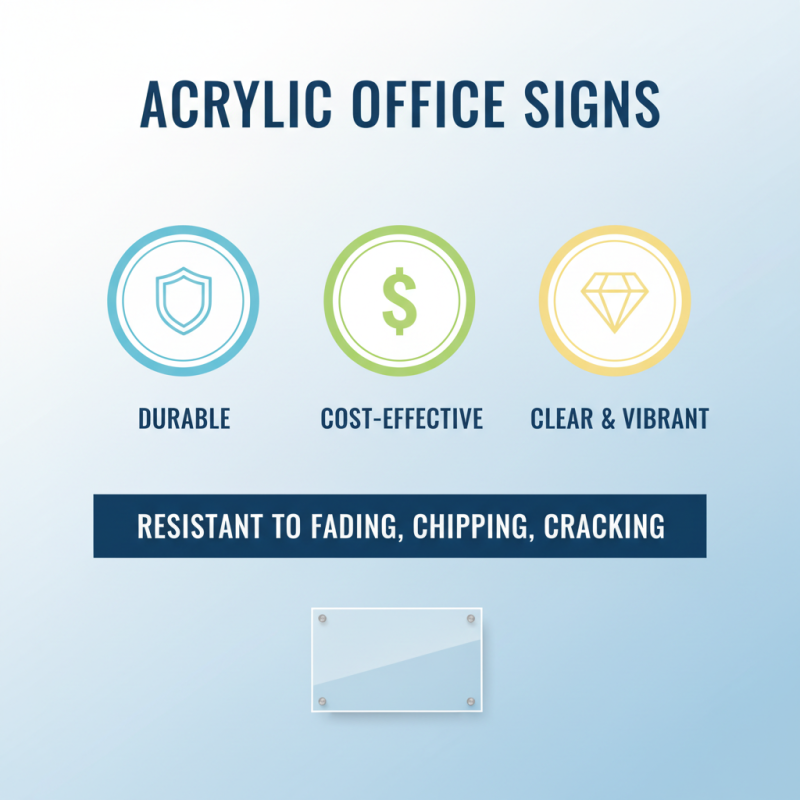
Acrylic office signs stand out for their durability and cost-effectiveness. Made from high-quality materials, these signs can withstand daily wear and tear. They are resistant to fading, chipping, and cracking. Unlike other materials, acrylic remains clear and vibrant over time. This makes it an excellent choice for displaying important information in a workplace.
Another advantage is the versatility of acrylic. It can be easily cut, shaped, and colored. This allows for creative freedom in design. When a business needs to change its signage, acrylic signs can be updated without a significant financial toll. However, some may find the initial investment higher than paper signs. It’s necessary to weigh the long-term benefits against short-term costs.
Acrylic office signs do have limitations. They require regular cleaning to maintain their appearance. If not cared for, they can accumulate dust and fingerprints. Additionally, while they are less likely to shatter, they can still scratch. A careful approach to maintenance is key to maximizing their lifespan. Adapting to these needs can enhance a workplace's image and efficiency.
The Role of Customization in Acrylic Office Signage
Customization in acrylic office signage plays a pivotal role in enhancing workplace efficiency and communication. According to a recent industry report, workplaces with effective signage can boost productivity by up to 25%. This highlights the importance of tailored office signs that reflect your brand's identity while providing clear information. Customization enables businesses to create signs that address specific needs, whether for directional purposes or displaying company values.
Opting for acrylic materials brings additional advantages. Their durability and aesthetic appeal can elevate the overall ambiance of an office space. Many companies report increased employee morale when the environment feels professional yet inviting. Colors, fonts, and sizes can be adjusted to fit different areas, ensuring that signs are both functional and stylish.
Tips to remember: Keep your messages concise. Use contrasting colors for readability. Don't shy away from creative designs that represent your brand's essence. Reflect on the types of signs missing in your workspace. Are they enhancing communication or fading into the background? Regular assessments of signage effectiveness can lead to better customization choices.
Comparative Analysis: Acrylic Signs vs. Other Material Options
When comparing acrylic signs to other materials, several factors come into play. Acrylic offers a sleek and modern look that can elevate any workplace. It is and easy to install, which appeals to many businesses. Other materials like wood or metal may add character, but they can also be heavy and cumbersome. Metal signs can rust, while wood can warp.
Acrylic signs are also resistant to scratching and fading, which is a significant advantage. For offices in high-traffic areas, durability is crucial. However, acrylic can chip if not handled carefully, which is a drawback. On the other hand, vinyl options are not nearly as durable and may require more frequent replacements.
In terms of customization, acrylic provides vivid colors and clean printing. This versatility allows for creativity that can align with company branding. However, some might argue that acrylic lacks the warmth that natural materials provide. It's essential to consider the company's image when choosing a sign type. Each material has its own charm and challenges, so careful thought is necessary.
Impact of Quality Signage on Workplace Branding and Employee Morale
Signage plays a pivotal role in shaping workplace branding. Quality signs can reflect a company’s identity. Well-designed signage creates a professional atmosphere. When employees see clear, attractive signs, it boosts their pride in their workplace.
Tips for effective office signage include choosing colors that match your brand. A cohesive color scheme helps reinforce brand identity. Make sure fonts are easy to read, even from a distance. Use images or logos that speak to your company’s mission.
Consider the placement of signs as well. Strategic locations can enhance visibility.
Quality signage also impacts employee morale. Employees feel more connected to a brand when they see it represented well. Good signage can motivate staff and improve overall satisfaction. However, poor design choices reflect carelessness. An unprofessional sign can have the opposite effect. Rethink how your signs communicate values and culture in your workplace.
The Importance of Compliance and Safety in Office Signage Design
In any workplace, safety is paramount. Office signage plays a crucial role in maintaining compliance with safety standards. Signs need to be clear and easily understood. When designing signs, consider the message they need to convey. Instructions must be concise. Employees and visitors should easily grasp them at a glance.
Acrylic office signs offer versatility for various needs. They can be customized to reflect the workplace's identity. Despite their aesthetic appeal, it's vital to focus on functionality. Signs should guide people, not confuse them. Using bright colors and readable fonts can enhance visibility. Still, the design process can be challenging. Balancing aesthetics and practicality requires careful thought.
Regulatory requirements vary by location. Some offices may overlook these, leading to potential hazards. Non-compliance can result in serious consequences. Every sign should not just look good but also serve its purpose. Regular reviews of signage effectiveness can highlight areas for improvement. Feedback from employees can reveal overlooked details. Don’t underestimate the impact that well-designed signage has on workplace safety.



 Inquiry
 Email
Email WhatsApp