For 2026, Metal Building Signs are more than a finishing touch: they help visitors identify a business, find an entrance, and recognize a brand from the street. Material choice matters. Aluminum keeps weight low; stainless steel offers a crisp, polished look; weathering steel develops a distinctive patina. But appearance alone is not enough. A sign must remain legible at the actual viewing distance, under the site’s lighting, and against the building’s exterior.
Industry research offers useful context, with an important caveat. FedEx Office’s 2012 “What’s Your Sign?” survey reported that 76% of U.S. consumers had entered a business they had never visited because of its signage. The survey also found that 68% had made a purchase after a sign caught their attention. These figures cover business signs broadly, not metal signs specifically, and they should not be treated as a forecast for every property. The International Sign Association and Oxford Economics have also examined the economic role of on-premise signs, reinforcing their value as a business communication tool. Still, results depend on placement, upkeep, and audience. A beautiful sign can be hard to read from a moving car. That happens. This guide compares metal sign styles, finishes, mounting options, and practical trade-offs to help businesses choose with clearer expectations for 2026.
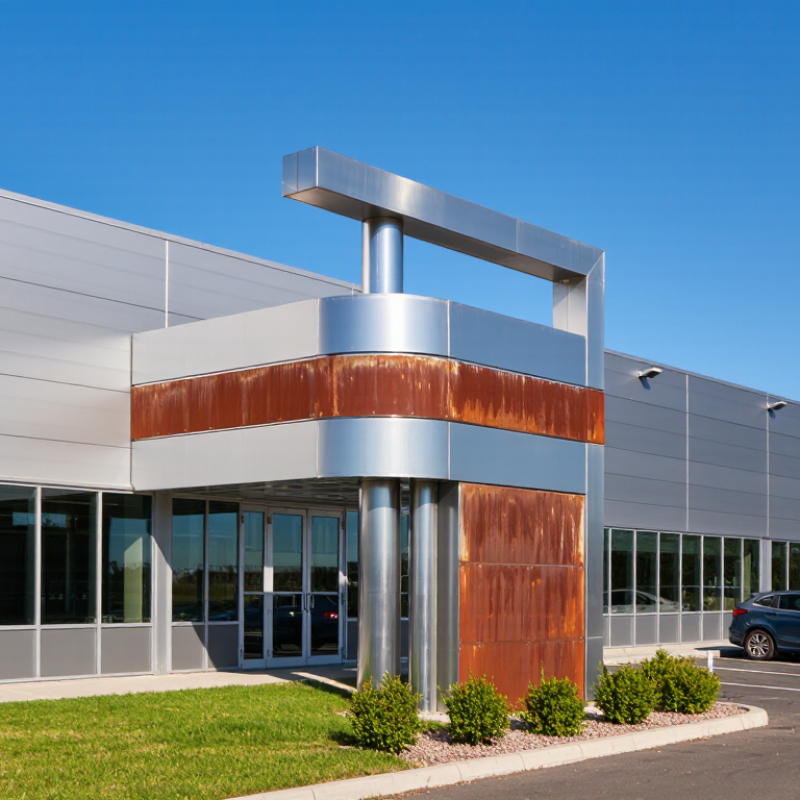
Metal building signs are identification and information panels made from materials such as aluminum or steel. They are attached to building walls, entrances, doors, or freestanding posts. A sign may show a building name, suite number, operating hours, or directions. Some are flat and simple; others use raised lettering or cut-out shapes. The right format depends on viewing distance, available space, and the building’s surroundings.
These signs appear on warehouses, offices, workshops, schools, and apartment buildings. Outside, they help visitors spot an entrance from a parking area or read a street-facing address. Inside, smaller metal panels can mark rooms, departments, or service areas.
Metal is often chosen for its firm feel and tidy appearance. Finishes and coatings can help limit fading or corrosion, though exposure, cleaning, and installation still matter. No sign is maintenance-free.
A well-made panel can still look out of place if its lettering is too small or its contrast is weak. It is worth checking the sign from the distance where people will actually read it.

For a metal building sign in 2026, consider exposure, viewing distance, and maintenance—not appearance alone. Aluminum is light and easy to shape, making it practical for large panels and wall-mounted letters. It can dent, though, and thin stock may feel less substantial up close. Stainless steel offers a crisp surface for many outdoor settings, but salt and poor drainage still deserve attention. Weathering steel develops a changing surface. That character is not always welcome near pale masonry, where runoff may stain. Brass brings warmth to entry plaques, yet its color can shift unless the finish is maintained.
Finishes affect legibility and upkeep. Brushed grain can make minor marks less noticeable, while powder-coated color can complement a building facade. Matte surfaces often reduce glare. Construction matters just as much. Flat-cut letters keep a clean profile; layered panels add depth. Cut-through details can reveal a contrasting backing, but edges need careful finishing to avoid a rough look. For projecting letters, specify returns and mounting methods before fabrication. Small alignment errors show. Ask for material thickness, finish samples, and fastening details in writing. A sample outdoors may look different under showroom lights.
Best Metal Building Signs for 2026
Main Types of Metal Signs for Building Exteriors
Exterior metal signs come in several practical forms. Dimensional letters create crisp shadows on brick, concrete, or glass. Aluminum panel signs offer a clean surface for building names and directional information. Projecting blade signs sit perpendicular to a wall, helping visitors spot entrances from the sidewalk. For larger sites, metal-faced cabinet signs can make room for changeable or illuminated displays.
Material and mounting matter as much as appearance. Aluminum is lightweight and resists corrosion, while stainless steel offers a denser, polished finish. Powder-coated surfaces add color, but scratches can expose the metal beneath. The 2012 FedEx Office sign survey found that 76% of consumers had entered a store they had not visited before based solely on its signs. It also reported that 68% felt a business’s sign reflected its product or service quality. These figures describe signage broadly, not metal signs alone. Still, visibility and upkeep deserve attention. A beautiful sign can fail if trees hide it.
Tips: Match the sign type to viewing distance and wall material. Check sightlines from the street, then confirm fasteners suit the façade. Small details count. Recheck the finish after the first wet season; maintenance plans are easy to overlook.
Approximate density of common sign metals (kilograms per cubic metre)
Aluminum is much lighter by volume than steel, brass, or copper, which can make it a practical choice for large exterior signs. Density values are approximate and vary by alloy; a sign’s actual weight also depends on its dimensions and thickness.
Choosing a metal building sign starts with the site, not the finish sample. Check viewing distance, sun exposure, wind, and whether people approach on foot or by vehicle. Aluminum is lighter and resists rust; galvanized or coated steel can suit larger panels, but damaged edges need attention. Near the coast, salt air changes everything. Ask for the metal grade, coating system, and maintenance instructions in writing.
For coated aluminum, the AAMA 2605-20 performance specification includes 4,000 hours of salt-spray testing. That is useful evidence of coating performance, not a promise of decades outdoors. Lab tests cannot reproduce every combination of shade, moisture, cleaning, and installation quality.
A sign facing afternoon sun may fade differently from one under an overhang. Choose raised lettering or strong contrast when visibility matters, and inspect a full-size sample from the actual viewing distance. Measure it at dusk, too.
One detail is easy to miss: fasteners and cut edges can age before the sign face does. Ask the fabricator how those points are protected, and budget for periodic inspection rather than assuming metal means maintenance-free.
A metal sign can last for years, but installation details matter. Start with a wall that can support the sign’s weight, including wind pressure on larger panels. Check that the mounting surface is flat. Uneven brick can twist a panel and stress its fasteners. Use hardware suited to both the sign material and the wall; incompatible metals may corrode where they touch. Leave room for drainage and airflow behind the sign, especially on exterior walls. Small gaps help water escape. A level and a careful measurement often prevent an expensive re-drill.
Care is simple, not optional. Rinse away dust and road grime with clean water and mild soap, then use a soft cloth. Skip abrasive pads, which can scratch protective finishes. Inspect edges, seams, and mounting points a few times each year. After storms, look for loose hardware or trapped water. Salt air and industrial residue can shorten finish life, so local conditions matter. Repair scratches with a coating approved for that sign’s material. I would not assume every metal needs the same cleaner or repair product; check the fabricator’s care instructions. Even good maintenance cannot prevent every mark, and that is worth accepting when choosing a finish.